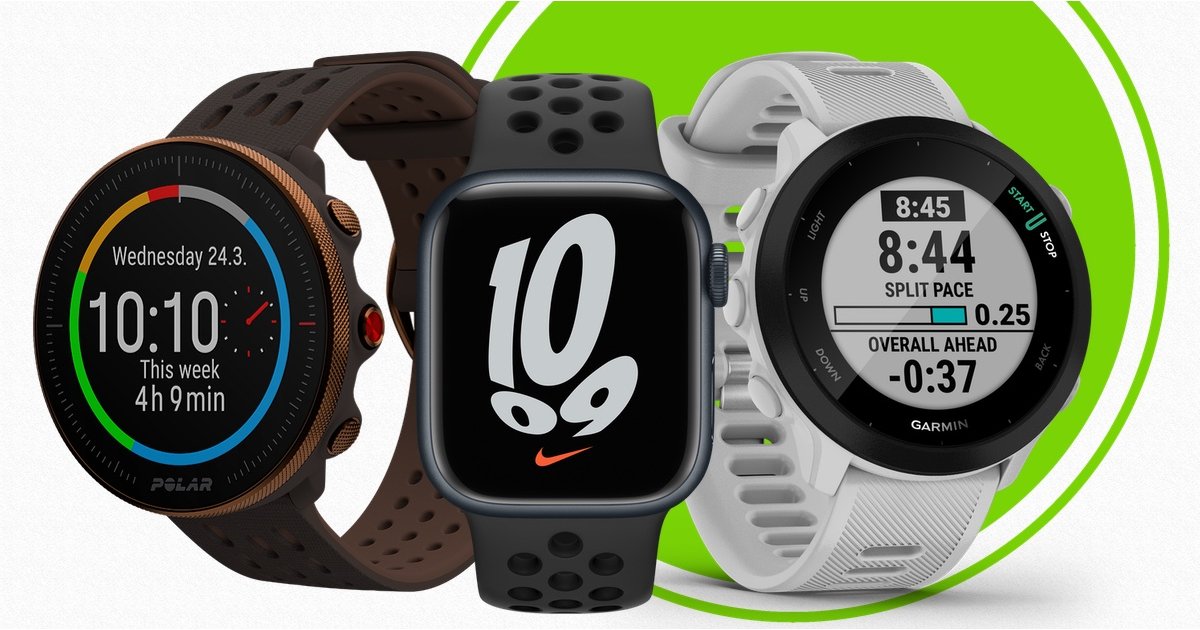
Whether you’re a beginner tackling your first 5k or prepping for your first marathon, buying a running watch can help you hit your goals.
Using a running watch offers an honest appraisal of your efforts and achievements, whether it’s just working out how far and fast you run, or taking advantage of data on recovery, intensity and even nutrition.
But new sports watches are more than just about pace/distance. They’re now designed to tell you when to train, and when to rest as well.
We’ve reviewed every running watch on the market – from cheap running watch options to the detailed alternatives for budding athletes – and compiled a roundup of the best picks from our testing.
It really is the definitive list, and we’ve tried to make sense of the dizzying selection for you.
Tl;dr best running watches:
- Best for entry level runners: Garmin Forerunner 55 – $199.99/£179.99
- Best budget running watch: Garmin Forerunner 45S – $129.99/£117.99
- Best for advanced running stats: Polar Vantage V2 – $499.95/£449.99
- Best running watch for maps and navigation: Garmin Epix (Gen 2) – $899.99/£799.99
- Best for ultra marathons/trails: Garmin Fenix 7X – $699.99/£699.99
- Best running watch with music: Garmin Forerunner 245 Music – $349.99/£299.99
- Best smartwatch for runners: Apple Watch Series 7 – $399/£369
How we test
Our buying guides are made up products we’ve fully tested, and all of our reviews adhere to our strict in-depth testing policy. We test every aspect in-depth, and benchmarking against key competitors so you can make an informed choice. You can read our editorial policy to find out why you can trust Wareable reviews.
James Stables is Wareable’s co-founder and editor-in-chief, and has spent nearly a decade testing and running with every wearable device from huge brands.
Top pick: Garmin Forerunner 55
Best running watch
- 20 hours GPS battery, up to 2 weeks in smartwatch mode
- 1.04-inch, 208 x 208 transflective display
- Size: 42 x 42 x 11.6 mm
- PacePro Strategies
- Daily suggested workouts
- Improved recovery advisor
- Triathlon mode
- Interchangeable 20mm straps
- Waterproof up to 50 metres
- Works with Garmin Coach
- Safety and tracking features
- Full Connect IQ Store support
- Price when reviewed: $199.99/£179.99
The Garmin Forerunner 55 is the natural successor to the Garmin Forerunner 45, but this entry level running watch steps things up.
While the Forerunner 55 shares the low-profile and minimal design, it’s brought on board some of the more insightful training and analysis features usually reserved for pricier Garmins.
The watch case itself measures just 42mm, which creeps up slightly in thickness coming in at 11.6mm thick compared to the 11.4mm sized body on the 42mm Forerunner 45.
Front and centre is a 1.04-inch, 208 x 208 resolution transflective always-on display, which offers strong visibility in all conditions and is a lot kinder on battery life.
The Forerunner 55 promises up to 7 days in smartwatch mode and 20 hours of GPS battery life and that’s what we experienced in our testing. That’s more than good enough for those embarking on half and full marathon training programs.
When it comes to racing, a key addition is PacePro, which helps you target race pace with gradients taken into account, VO2 Max estimation and race predictor data on finishing times based on your fitness.
It now supports Garmin Coach and suggested workouts, so it can be more of an active participant in your training.
There’s Garmin’s Elevate optical heart rate monitor to track heart rate continuously, during exercise and unlock features like Garmin’s Body Battery Energy monitor and the improved recovery advisor.
You do also have the option to pair up external heart rate monitors to improve accuracy measuring effort levels during runs.
The Garmin Forerunner 55 is a better running companion than the 45 thanks to new software features, that seek to help you run your best. It balances a fantastic set of features that offers way more than the basics, in a sleek and light package. We love it.
Garmin Forerunner 45/45S
Best budget running watch
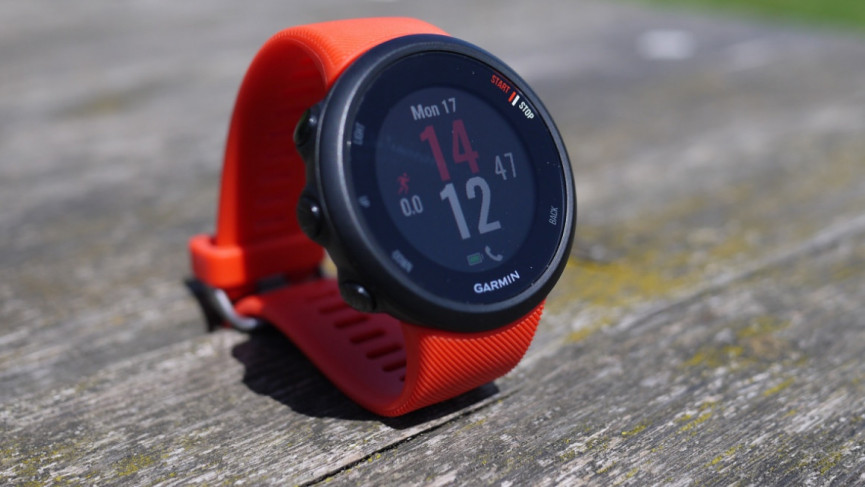
- 39mm and 42mm sizes
- Pace, distance, time tracked
- VO2 Max data
- Heart rate monitor
- ANT+ support fior chest straps
- 5 ATM water resistance (50m)
- 13 hours GPS tracking
- Forerunner 45: $149.99/£129.99
- Forerunner 45S: $129.99/£117.99
The arrival of the Forerunner 55 means the Forerunner 45 is technically obsolete. But a quick scan of shopping sites shows it easily available for prices around $149/£99 – making it around 25% cheaper than its successor.
And what’s more, Garmin’s choice to make the Forerunner 55 a single size means the Forerunner 45S is slimmer, cheaper and a great choice for slim wrists.
And it’s still a fantastic all-rounder. It’s the build that we really love. It’s so slim and light – and with 39mm (on the even cheaper Forerunner 45S) and 42mm sizes it’s brilliantly unisex.
And while it’s certainly at the entry-level end of the huge array of Garmin devices on offer, it’s far from basic.
You get the normal running metrics, but also more advanced analytics with VO2 Max scores to help you monitor your improving fitness. VO2 Max will be shown at the end of a run and tracked in the Garmin Connect app.
You’re getting the same low-res display you get on all of Garmin’s watches, waterproofing up to 50 metres depth and an optical heart rate monitor.
The Forerunner 45 will track running, cycling, treadmill running, indoor track, elliptical, cardio, yoga abut there’s no swim profile, despite the water resistance. Smartwatch features on the Forerunner 45 include notification support, while Connect IQ compatibility lets you customize your watch face.
If you’re new to running and don’t want to spend much, the Forerunner 45 (and smaller 45S) keeps things simple and should be a definite consideration.
In-depth: Read our full Garmin Forerunner 45 review
Polar Vantage V2
Best running watch for advanced stats and training analysis
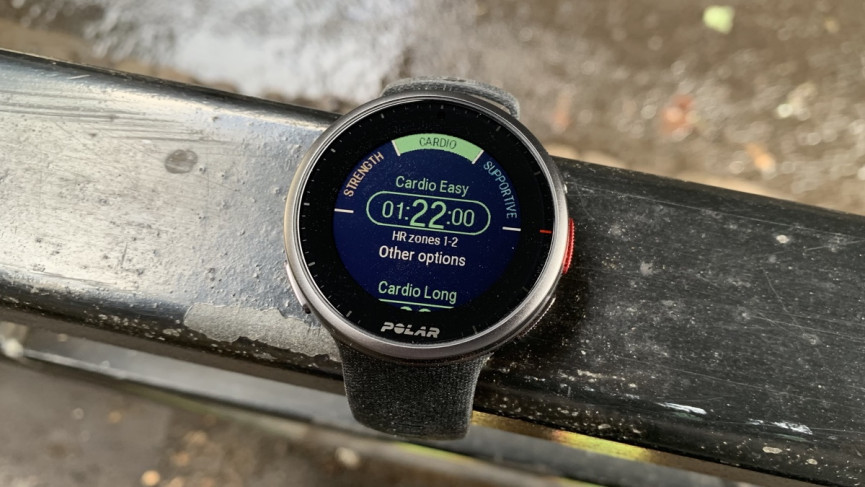
- Works with Android and iOS
- 47mm case
- 1.2-inch, 240 x 240 pixel
- 22mm replaceable straps
- MIL-STD-810G durability
- 40 hours GPS battery life, 100 hours tracking in low GPS mode
- Optical HR
- GPS, Glonass, Galileo
- Running power and cadence on the wrist
- 130 sport modes
- FuelWise fuelling recommendations
- Hill Splitter segmented insights
- Turn-by-turn navigation
- FitSpark workout recommendations based on recovery
- Nightly Recharge sleep and recovery insights
- Price when reviewed: $499.95/£449.99
The Vantage V2 is the watch built for triathletes and truly data obsessed runners. It comes in one size – a hefty 47mm – although it’s impressively light at just 52g compared with the 84g of the Fenix 6.
Ultrarunners demand good battery life, and that’s here with 40 hours of full GPS tracking that can be extended to 100 hours. However, we have found accuracy issues in power saving modes, and we couldn’t get to 40 hours in testing as promised.
But runners are well catered for with a full range of stats – and there’s a focus here on running power, for those interested in pacing based on effort rather than speed. You can read our guide to running power here.
Polar has added the Hill Splitter and FuelWise features from its Grit X sports watch, with the latter enabling you to plan your adventure’s food intake and remind you on the go. We found it worked really well, but the reminders were a little easy to miss.
What we really like are the new running performance tests. A maximal (run until exhaustion) and a sub maximal (run and stop before exhaustion) option to give you a better sense of your current state of fitness, and they will supercharge your VO2 Max scores to new levels of accuracy.
And recovery is a big part of the Vantage V2 experience, with an excellent leg recovery feature that estimates when your body has recovered for races or long training runs.
Sleep tracking also focuses on recovery and we found it outstripped Garmin in terms of accuracy.
Running stats and VO2 Max are a big part of the feature set. Training Load and Benefit insights to give you a better sense of your workouts and make sure you’re not training too hard – and FitSpark workouts are tailored around your physical readiness.
The 10-LED array heart rate monitor is the most advanced on a Polar watch to date, and it helps fuel a bunch of data points, from recovery and sleep tracking to running analytics derived from HRV and VO2 Max.
If you’re really focusing on the minutiae of your recovery and physical performance, this is the running watch for you.
Read our full Polar Vantage V2 review.
Garmin Epix (Gen 2)
Best running watch for mapping and navigation
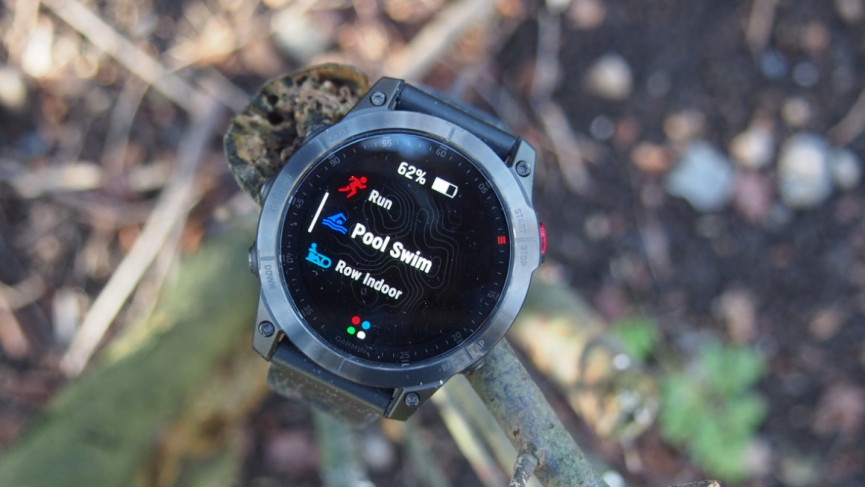
- 47mm case
- 1.3-inch, 416 x 416 AMOLED touchscreen display
- Replaceable QuickFit straps
- Waterproof up to 100 metres
- 42 hours GPS battery life, 75 hours tracking in low GPS mode
- Multi band GNSS support
- Optical HR
- Real-time Stamina
- 30+ sport modes
- Full color mapping
- Turn-by-turn navigation
- Daily suggested workouts and improved recovery advisor
- Visual race predictor
- Price when reviewed: $899.99/£799.99
The Garmin Epix is like a cross between the Garmin’s Venu and Fenix series watches giving you a color display to make use of features like full mapping and still get rich sports tracking for indoor, outdoor and more niche activity pursuits.
You can only pick it up in the one 47mm size, but it does come in a stainless steel or lighter titanium bezel option, with the latter pushing the price up. It’s the AMOLED touchscreen display that’s the star of the show here. It’s nice and bright, responsive and it makes viewing Garmin’s Topo maps on it a real pleasure.
You’re getting the best of Garmin’s running features including all of its advanced training analysis, access to Garmin Coach, daily suggested workouts, PacePro pacing strategies and you can make use of turn-by-turn navigation and upload workouts to the Epix.
Garmin has also introduced multi band GNSS support that means the Epix can talk to multiple frequencies from multiple satellite systems to improve accuracy in typically problematic areas for satellite coverage. You’re also getting a new real-time stamina metric to better understand how far you can run and Garmin’s race predictor has been boosts with graphs to help bring context to predicted times.
On the battery front, whether you have the display in always-on mode or not, you’ve got something fit for a solid week’s worth of training. It can max out at 16 days in smartwatch mode and offer up to 42 hours in maximum GPS battery mode, that using it in that multiband GNSS support will see the battery drop a little quicker.
You’ve got the best of Garmin’s smartwatch features here too including Garmin Pay and a built-in music player with offline playlist support for Spotify,, Amazon Music and Deezer.
If you like the idea of owning a Garmin Fenix-style running watch with the addition of a color display, that’s what you’ll get from the Epix.
Read our full Garmin Epix review
Garmin Fenix 7X
Best running watch for ultra marathons and trail runs
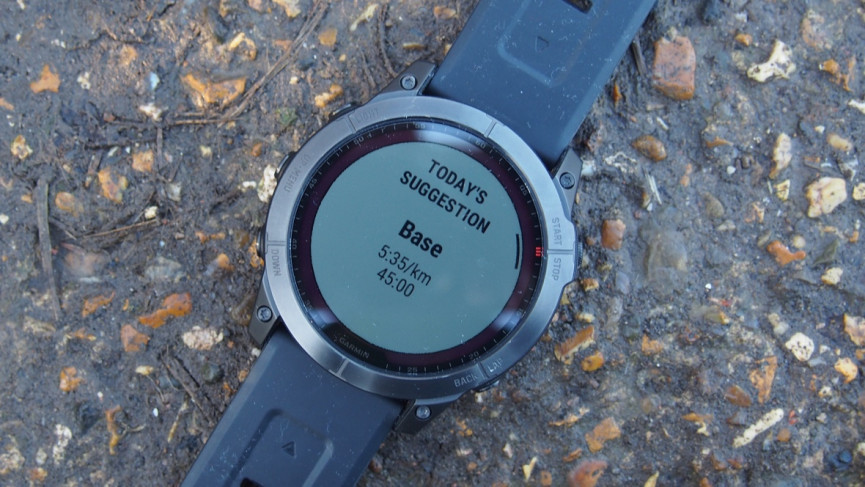
- Available with steel or titanium bezel
- 51mm case
- Power Sapphire lens
- 89-hour GPS battery, extends to 122 hours with solar
- 62-139 days in Expedition GPS mode
- 1.4-inch, 280 x 280 transflective touchscreen display
- Multi-continent TOPO maps
- Real-time Stamina
- Visual race predictor
- Interchangeable 26mm straps
- Waterproof up to 100m
- LED flashlight
- Solar charging
- Price when reviewed: $899/£799
Our ultra running watch pick was the Garmin Enduro, but then the Fenix 7X turned up, giving you the full color mapping you don’t get with the Enduro and still offer heaps in the battery department.
The biggest member of the Fenix family comes with either stainless steel or a titanium bezel and feature Garmin’s new Power Sapphire lens, giving you that added screen protection all while offering solar powers to give you that battery boost. There’s the same sized 1.4-inch transflective display as the Fenix 6X, but now offers touchscreen functionality for the first time on a Fenix that’s nicely responsive and can be used during mapping mode to scroll through maps.
Features-wise, you’ve got the ultra running tracking mode from the Enduro to let you better account for stopping at aid stations during races. You’re getting color Topo maps and turn-by-turn navigation. There’s also multi-band GNSS support to offer more accurate outdoor tracking and features like real-time stamina and visual race predictions make it a better watch to help you understand how you can run based on historical data and why your predicted marathon times might be a bit on the slow side.
Then there’s the battery life. With or without factoring in the onboard solar features, this is a watch that’s capable of going for a month off a single charge. Garmin touts figures like 28 days in smartwatch mode or 37 days with solar. GPS battery life is anywhere from 89 hours to 122 hours and it can max out at 139 days in Expedition GPS mode. In our testing, it lasted 3.5 weeks. That was using tracking the maximum multi band GNSS mode.
You do have the very useful power manager mode to make sure you don’t have features in use when you don’t actually want to use them too.
If you can live without using that multi band GNSS mode on a regular basis, this is a Fenix watch that really can go the distance when you go the distance.
Read our full Garmin Fenix 7X review
Garmin Forerunner 245 Music
Best running watch for music
- Works with Android and iOS
- WRunning, biking, swimming, gym workouts
- Heart rate monitor
- VO2 Max
- Basic navigation features
- Music playback, 500 songs storage
- Offered in non-music model as well
- Spotify syncing
- Price when reviewed: $349.99/£299.99
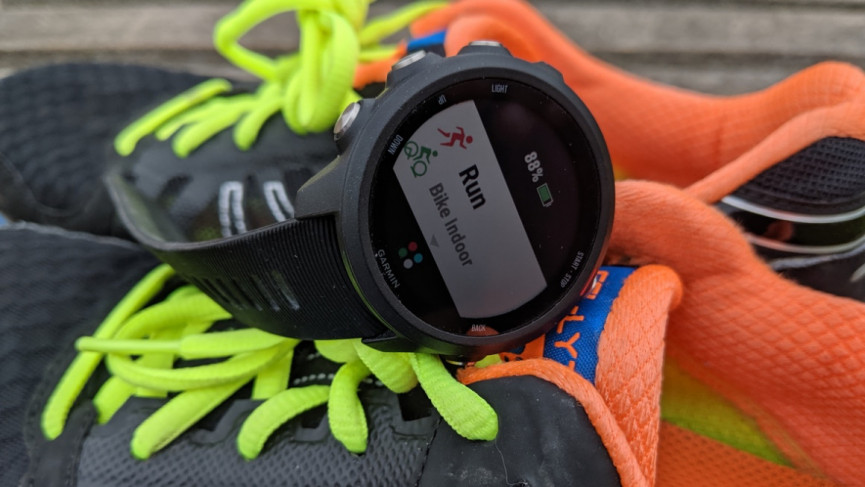
The Forerunner 245 may sit under the 645/745/945 but it’s far from entry-level. It’s a serious running watch, packed with Garmin’s most advanced analytics, music storage and good battery life – but has a price tag to match.
Unless you’re looking for monster battery life it has everything you’ll need, including GPS and a built-in heart rate monitor.
The built-in music player support works in the same way as other Garmin watches. You can transfer over your own music or playlists from streaming services, then you can pair some Bluetooth headphones and leave your phone at home. You’ve got enough storage on the 245 for 500 songs, too, which should be enough for most.
It leverages the optical heart rate sensor to take VO2 Max readings – which is then turned into insights on your recovery, including Training Load, Training Effect and Training Status, which are all determined by analysing post exercise oxygen consumption and heart rate variability.
It also has Garmin’s PacePro feature, which uses GPS data to pace races to your desired finishing times – even taking hills into account.
Battery life sits at around a week with standard use, though, naturally, taking advantage of the music features will reduce this. It does lack payment support and an altimeter, but, all in all, it’s a great running watch for anyone that has been looking for music features too.
If you’ve outgrown basic running watches this comes seriously recommended.
In-depth: Our full Garmin Forerunner 245 Music review
Apple Watch Series 7
Best smartwatch for runners
- Works with iPhones only
- 41mm and 45mm sizes
- GPS, GLONASS, Galileo, BeiDou and QZSS
- Always-on display
- Swim-proof
- Works with third party sensors like chest strap monitors
- Distance, time, pace and cadence
- Third party apps from Strava, Runkeeper etc
- 18 hours battery life, rapid charging support
- Price when reviewed: $399/£379
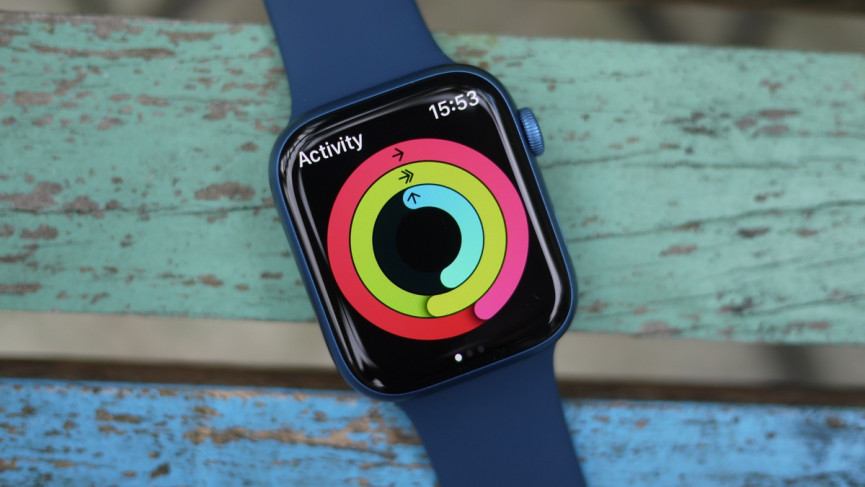
Back when the Apple Watch first arrived, we’d have struggled to recommend it as a running watch. Fast forward to 2021, and, if you’re looking for a smartwatch for casual running or serious running, Apple’s option is firmly the best we’ve tried.
We’re recommending the Series 7, which comes in new 41mm and 45 case sizes, but includes the same optical heart rate sensor technology as the 6, that still offers some of the most accurate HR data we’ve seen from a smartwatch. If you’re not satisfied with the accuracy, you can pair it up with external chest strap monitors.
The outdoor tracking is up there with the best in terms of accuracy and if you’re not satisfied with Apple’s own Workout app to track runs, you’ve got a host of great third party running apps to try out instead.
Then you can factor the smartwatch features that enrich that tracking experience. You can sync playlists from the likes of Apple Music and Spotify. Apple Pay on the Watch is arguably the best payment support you’ll find on a smartwatch, plus you’ve got an LTE option to help you leave your iPhone behind and still make calls and receive notifications.
Overall battery life remains the same 18 hours as the original Apple Watch and GPS battery life is is around 6-7 hours, which should make it good enough for a marathon, though our experience suggests it might struggle with its full gamut of features in play.
Opt to not use the always-on display and make use of the new quick-charging feature to give you a quick top up before a run and battery gripes aside, Apple offers a great running experience from its latest and greatest smartwatch.
Read our full Apple Watch Series 7 review.
Huawei Watch GT Runner
Android smartwatch with super running features
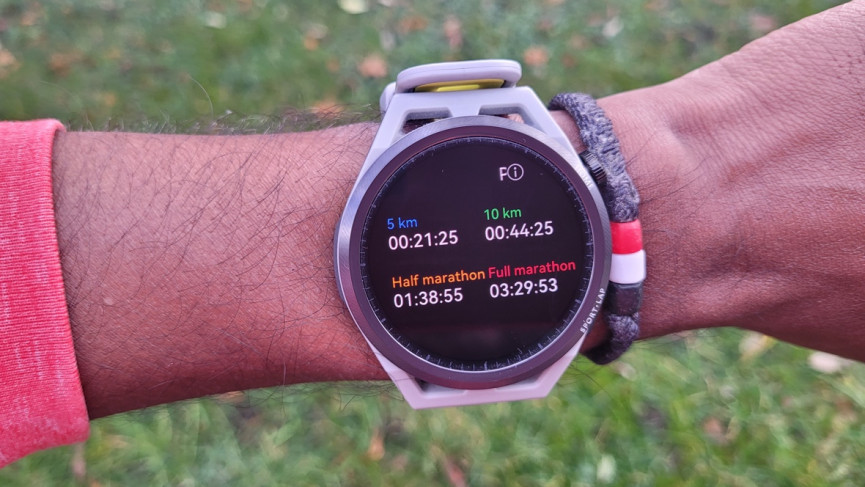
Of course, the Apple Watch only works with iPhones – so if you have an Android smartphone, the Huawei Watch GT Runner is a top smartwatch option.
It’s a repackaging of the Huawei Watch GT 3, which is also excellent for running workouts. But the GT Runner has got a more sporty design and lightweight build.
Core running features include excellent training plans and coaching, based on your performance as a runner, and you can do everything from the watch itself.
There’s also a host of VO2 Max and training effect data on the watch – including the Huawei Running Ability Index, which measures your performance and suggests finishing times for key race distances. And these were spot on in our testing.
GPS has supposedly been boosted with a new floating antennae, although we saw no real evidence of improvement in our testing and we did find some small tracking issues in built-up areas.
Heart rate tracking performance was also quite average, with up to 10bpm variations from a chest strap, which is slightly more than we’d expect to see from rival Garmin/Fitbit/Apple devices.
Pretty much all Huawei Watch GT Runner features can be found on the cheaper GT3, but the design will appeal to runners. However, for Android users looking for a smartwatch, the positives outweigh the negatives.
Read our full Huawei Watch GT Runner review.
Coros Pace 2
A great entry level option to the Garmin Forerunner 55
- Works with Android and iOS
- 1.2-inch display, 240 x 240 resolution display
- Optical heart rate monitor
- Barometric altimeter, accelerometer, compass, gyroscope, thermometer
- Works with Stryd and external heart rate monitors
- Waterproof Rating 5ATM
- 30 hours in Full GPS mode
- 60 hours in UltraMax mode
- Price when reviewed: $199/£179
Coros is somewhat of a minnow in the GPS running watch world – but it’s quickly make a name for itself and that’s best represented by the new Pace 2.
It’s a feature-packed sports watch that’s still designed for triathletes, but has all the tools to make it a formidable running watch without having to pay a premium for it.
All the key sensors and running profiles are on board, plus it has the connectivity support to let you pair up additional sensors like Stryd’s foot pod sensor and external heart rate monitors.
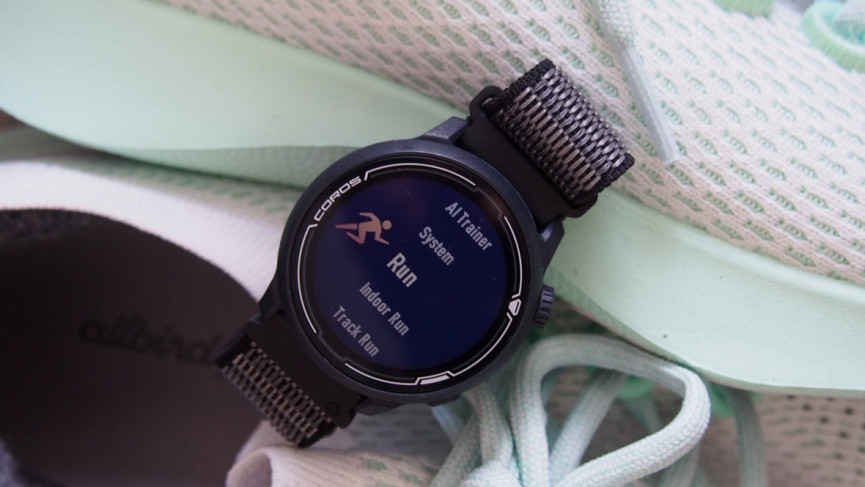
Using the built in heart rate sensor the Pace 2 can tap into its own recovery metrics in the shape of AI Trainer. This shows you a ‘Stamina’ percentage and aerobic/anaerobic training effect numbers (0-6), to show how recovered you are. Coros has rolled out its new Evolab insights that bring the kind of training insights and race predictor features for runners that you’d expect to find on pricier watches.
Coros has now also added strength training features that will count reps, let you build workouts and will show you whether you’re focusing as much on your legs are you are bulking up your upper body.
It works with third party apps including Strava and then there’s that battery life. It pretty much wipes the floor with the closest priced Garmin and Polar watches for GPS battery numbers. If you have around $200 to spend, you’d be struggling to find a watch that offers better value for money.
Full review: Coros Pace 2 review
Polar Vantage M2
An attractive running watch alternative to the Forerunner 245
- Works with Android and iOS
- 1.2-inch display, 240 x 240 resolution display
- Optical heart rate monitor
- Waterproof Rating 3ATM
- 30 hours in Full GPS mode
- FuelWise nutrition tracking
- FitSpark adaptive workouts
- Price when reviewed: $299/£269
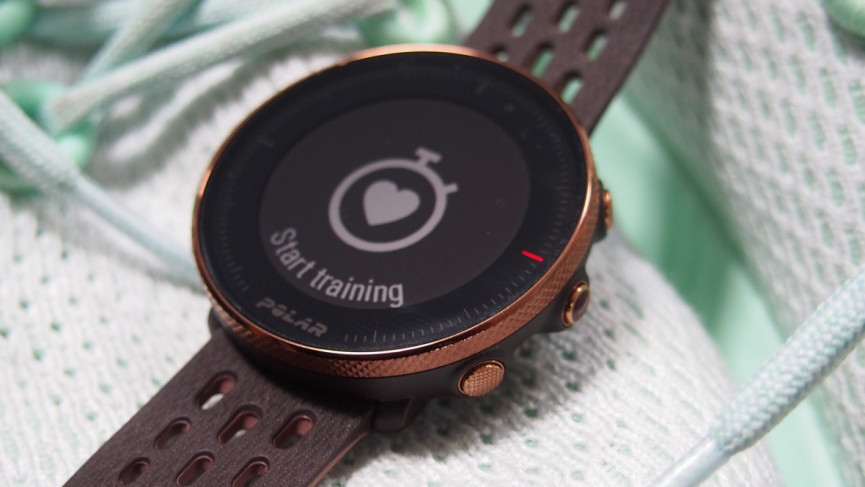
The Polar mid-range sports watch is possibly its biggest crowd pleaser, and the closest to the excellent Garmin Forerunner 245 in terms of data, price and features.
Firstly, it’s a looker. Polar has gone for a smartwatch look, with an etched bezel and fetching metallic colors that make it much more unisex and stylish than rivals. There’s black, gold and brown case colors that can be partnered up with silicone, textile or leather bands.
In terms of case size it’s 46mm, which puts it on the large-size for some women, however, it weighs just 45g.
But the Polar has substance to match the style. Aside from GPS tracking and over 100 sport profiles, the Training Load Pro and Cardio Load features do an excellent job at revealing the effect of workouts, how much they’ve depleted you and all of that data factors into the FitSpark adaptive training programs.
Rest and recovery is a big part of the deal, and in our testing the Polar sleep tracking is some of the best insights and accuracy of any device we’ve reviewed.
We’re also big fans of the FuelWise feature, aimed at people that have nutrition plans for longer races, runs or cycles. The Vantage M2 can remind you when to take on carbs and nutrition, so you don’t bonk.
In short, the Vantage M2 does a brilliant job as a training partner and looks great on the wrist. Battery life isn’t shabby at 30 hours of GPS, but some of the night time sensors do take their toll on longevity, with total battery life only five days in our testing.
However, for those looking for an everyday sports watch with deep insights on training – this is a top choice.
Read our full Polar Vantage M2 review.
Polar Ignite 2
A cheaper Polar watch that offers great run tracking
- 43mm case
- FitSpark workout analysis
- Optical heart rate
- 20 hours GPS tracking
- Price when reviewed: $229.90/£199.50
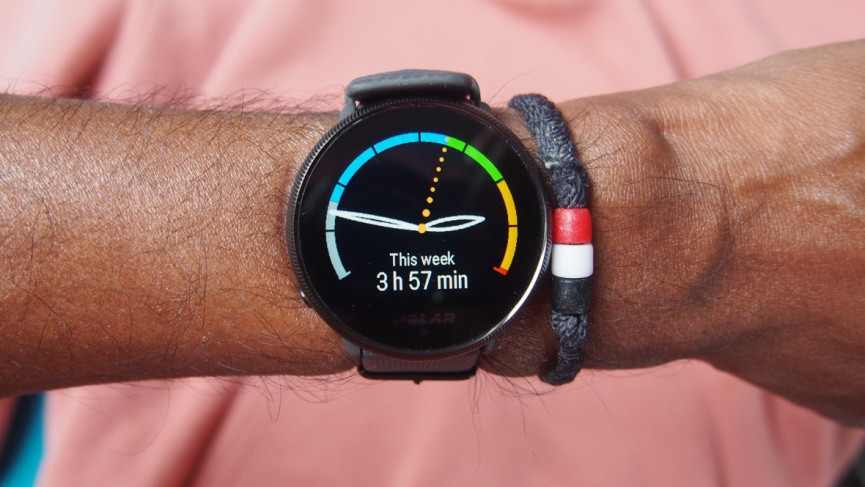
If Polar’s Vantage series watches are a little too pricey for you, the Ignite 2 gives you pretty much everything you need to track your runs in a smaller, lighter body.
The original Ignite is still sticking around and the Ignite 2 offers a similar 43mm case that weighs just 35g and measures in at 8mm thick. What’s changed is a nicer, more textured finish on the case and a bigger collection of straps, giving you the option of swapping out the silicone band for something less sporty.
You’re still getting built-in GPS with Polar’s quick fix GPS tech on board to get you up and tracking in a speedier fashion. Polar also includes the same Precision Prime heart rate sensor technology it uses on its pricier watches and the option to pair up an external heart rate monitor via Bluetooth if you’re not satisfied with the accuracy.
Polar has sought to improve smartwatch features adding music controls, weather forecasts and watch face themes, which debuted on its Vantage V2 and Grit X watches. It does lack features like payments and a music player, but does still works with Android and iPhones via Polar’s Flow mobile and desktop apps. It doubles as a fitness tracker too and offers Polar’s Nightly Recharge measurements to give you a better idea about your recovery from a tough day of training.
Performance-wise, it’s a reliable tracker for runs offering core metrics and additional analysis like Training Load and Energy Sources, which shows the breakdown of whether carbohydrates, protein and fats predominantly fuelled your run. You also still get the great FitSpark workout recommendations that you can follow on the watch and offer to fill the training gaps in between your running time when you need to add in some strength or mobility work.
Battery life in smartwatch mode is still around 4-5 days with GPS battery life jumping from 17 hours to 20. There’s now also lower power modes to boost battery life while tracking at the expense of GPS accuracy.
It’s a nice-looking alternative to the Forerunner 45 and with features like FitSpark, it has a really impressive feature you won’t find on Garmin’s entry level watch. If you can live without onboard GPS you get on the Ignite and want to spend even less on a Polar watch, you should also cast your eye over the Polar Unite too.
In-depth: Polar Ignite 2 review
Garmin Venu 2
An Apple Watch alternative with a color AMOLED screen
- Works with iPhones and Android phones
- 45mm and 40mm sizes
- New Garmin Elevate heart rate monitor
- Swim-proof
- Works with third party sensors like chest strap monitors
- Distance, time, pace, cadence and elevation
- Offers payments, music player
- Price when reviewed: $399.99/£349.99
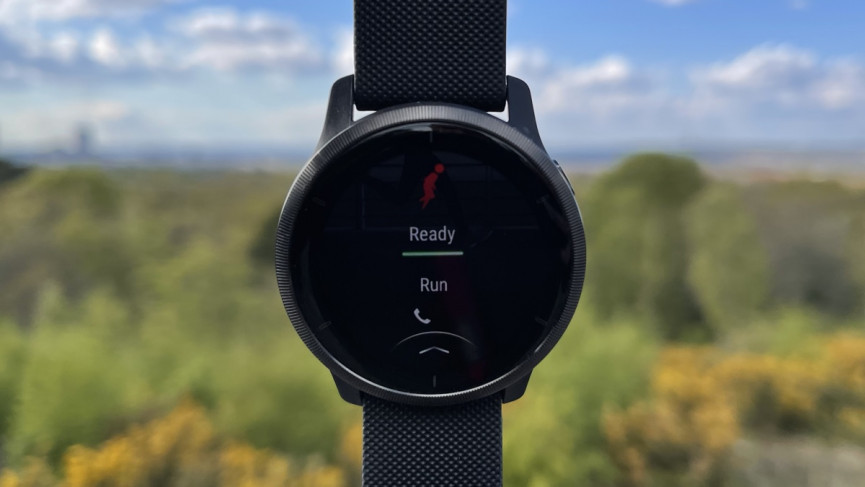
The Venu has emerged as Garmin’s answer to the Apple Watch. With the Venu 2, you’re still getting a color screen, the best smartwatch features Garmin has to offer and those tracking staples that make it a great fit for running.
The latest Venu now comes in two size options with the Venu 2 (45mm) and the smaller Venu 2S (40mm). The Venu 2 will give you the bigger, higher resolution color AMOLED touchscreen display, but both include Garmin’s latest Elevate optical heart rate sensor that promises to deliver more accurate data.
You’ll get built-in GPS of course and core running metrics along with additional ones like running VO2 Max found inside of Garmin’s companion Connect app.
As a smartwatch, it’s something that works with Android and iPhones and gives you notifications, a music player with room for 2,000 songs and support for streaming services like Spotify. There’s also payments and access to Connect iQ Store to add more apps, watch faces and data fields. if you want some voice-enabled features, the new Venu 2 Plus offers a built-in microphone and speaker to let you access your smartphone assistant from your watch.
We found tracking accuracy reliable and the bigger screen and improved UI makes it a nicer watch to run with too. We didn’t see improvements in heart rate accuracy for running, despite the inclusion of that new sensor. You can pair up an external sensor at least.
The quoted 12 days battery life came up short for us and is better suited to just over a week. If you factor in using it with the screen set to always-on, that’s going to drop to closer to 4-5 days. The 22 hours of GPS battery should be fit to get you a week’s worth of tracking too.
If you want more battery than an Apple Watch and great run tracking, the Venu 2 is one to look at instead.
Read our full Garmin Venu 2 review and Garmin Venu 2 Plus review
Huawei Watch GT2e
A cheap running watch with solid running features
- Works with Android and iOS
- 47mm case size
- GPS built in
- 14 day battery life
- Pace, distance, calories data
- Training Effect, Training Load and advanced data
- Fitness tracking smarts
- Price when reviewed: $199/£159
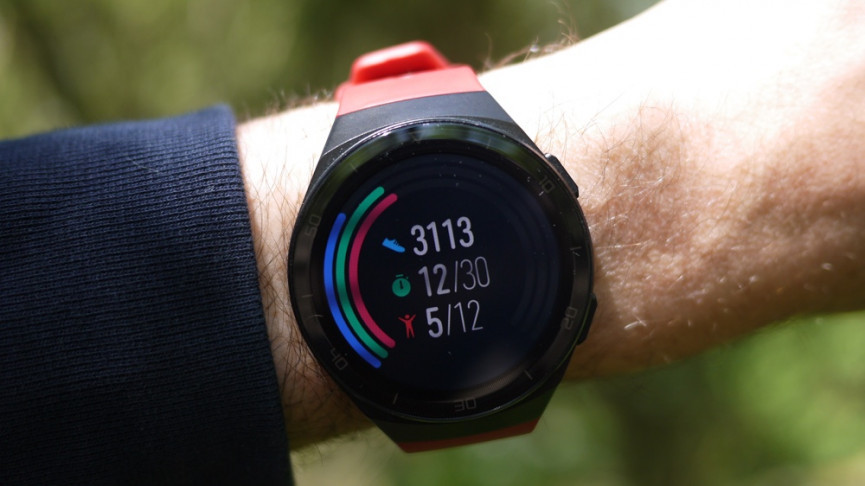
A running focused smartwatch with plenty of detailed fitness data on offer, the Huawei Watch GT2e is a great option for anyone looking for a good-looking watch that offers some nice running features for beginners or anyone that wants to add more structure to their runs. You can pick up the Huawei Watch GT3 or the incoming Huawei Watch GT Runner, which cost more, but we still think there’s great value picking up the older GT2e.
It now has a more workout-friendly band, which is changeable if you want to smarten things back up. The 1.39-inch AMOLED screen is super sharp and is a nice place to view your fitness stats on the move too.
It covers the basics in terms of real-time stats, but packs in Firstbeat’s heart rate powered insights to start delving more into your performance. That means you get the same Training Effect, Training Status and recovery data you’ll find on top level sports watches such as the Forerunner 245 Music. However, we did find VO2 Max estimates to be much higher than Garmin, and frankly a little unrealistic.
Huawei also includes a series of running plans, which are all nicely integrated and a good starting point for beginner runners who want to add more structure to training.
One downside of this watch is that data has to live inside of Huawei’s own Health app, and there’s no option to hook up to Strava which is a strength of the rival Amazfit Bip U and GTS 2 Mini.
But battery life is a real highlight. Huawei promises 14 days, and it delivers even when you tap into smartwatch features like notifications and music.
Wareable verdict:Huawei Watch GT2e review
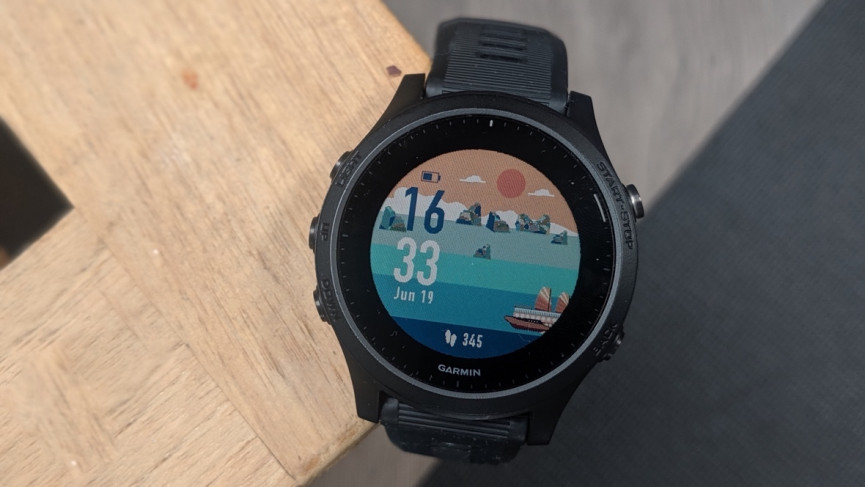
Garmin Forerunner 945
A smaller alternative to the Fenix with great mapping
- Works with Android and iOS
- Triathlon tracking
- 47mm case size
- Heart rate monitor
- ANT+
- Advanced analytics
- Running Dynamics with Running Pod
- Smartwatch notifications and Garmin Pay
- Spotify syncing and offline music (1000 songs)
- 36 hours GPS tracking, 17 hours with music
- Price when reviewed: $599.99/£519.99
This Forerunner 945 sits at the top of the Forerunner line, and though the name suggests this is solely focused on tracking runs, it actually packs in support for a huge gamut of workouts.
You get loads of biometric data on performance and recovery thanks to the built-in heart rate monitor, as well as Garmin Pay support, music playback, navigation features and color maps.
Obviously, it does track your runs, though, covering everything from treadmill to trail running, with plenty of metrics to dive into after your training session. You can see VO2 Max, heart rate variability and post-exercise oxygen consumption a huge part of the attraction.
There’s also Training Effect, Training Load and Training Status try to ensure sure you’re not overexerting yourself. It will advise you on your progress, predict your race times (can be hit and miss) and let you know how long to leave it before your next run.
It’s also compatible with Garmin’s Running Pod, which adds additional data, such as vertical oscillation, ground contact time, stride length and lactate threshold.
Its battery life of up to 36 hours of GPS tracking supported doesn’t feel as impressive as what you get on the new Fenix 7 or the Epix, but should still be good for most training throughout the week on a regular basis.
The price tag is an issue with the Forerunner 945 and it’s aimed at only the most dedicated and advanced runners.
Read our full Garmin Forerunner 945 review
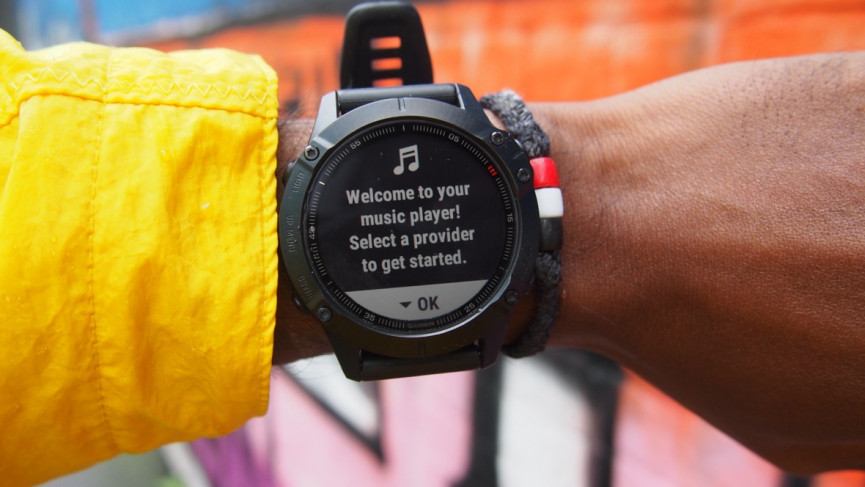
Garmin Fenix 6 Pro
A cheaper, older Fenix that’s still a great running watch
- Works with Android and iOS
- Huge array of tracked sports
- 47mm case
- Optical HR + ANT+ support
- Advanced running analytics
- PacePro
- TOPO mapping
- Connect IQ apps
- 2000 songs + Spotify syncing
- Price when reviewed: From $699/£599
With the Fenix 7 on the scene, the excellent Fenix 6 should see some unmissable deals. That’s because it still offers a lot of what you get on the 7, which still makes it a solid option for runners to consider.
Garmin offers the Fenix 6 in standard and Pro models, and we’d say it’s worth paying extra and going Pro.
Like the Forerunner 945 (above) it matches the top end Forerunner for data output. That naturally includes VO2 Max, recovery times, race prediction, Training Effect (aerobic and anaerobic from every session), Training Load (and when to take a break) all gleaned from the built-in optical sensor.
For those who love to explore on their runs, there’s full TOPO rich mapping, an upgrade over the standard Fenix 5, and you can also upload GPX routes to follow, as well.
On the music front, you’re getting similar features you’ll get on the likes of the 245 Music and 945, letting you drag and drop on your own music and podcasts to the watch. You have enough room for 2,000 songs, and of course, can benefit from support for apps like Spotify and Deezer. That means you can listen to your playlists offline and leave your phone behind.
The smaller and lighter design means it’s a nicer watch to run with than previous Fenix models. The battery life remains strong too with over 50 hours of GPS tracking available, and if you want to eek out even more power, Garmin has launched a Fenix 6 Pro Solar edition.
While the Fenix 6 is an incredible running watch, it’s the multisport tracking that sets it apart. Those that only care about running should look at the Enduro or Forerunner 945. If you want still want to go for a smaller case with the same features, go for the 6S. If you like your watches big and bulky, then it’s the 6X you’ll want on your wrist instead.
In-depth: Garmin Fenix 6 review | Garmin Fenix 6S review | Garmin Fenix 6X review
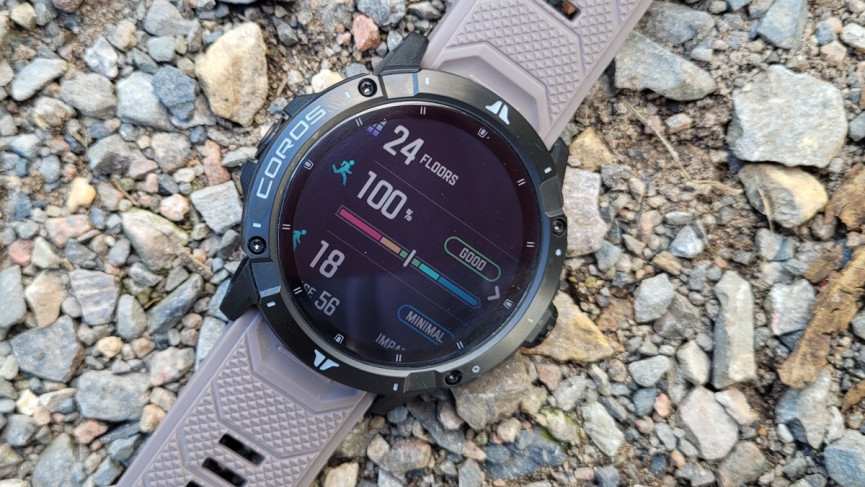
Coros Vertix 2
A Garmin Fenix alternative with seriously big battery life
- 140-hour GPS battery, extends to 240 in maxpower modes
- 1.4-inch, 280 x 280 64 colour display
- Size: 50.3 x 50.3 x 15.7mm
- Weight: 89g
- Heart rate: Optical and ECG readings
- GPS: Full system GPS with Dual Frequency tracking
- Navigation: Offline street and TOPO maps
- Connectivity: Bluetooth 5.0, Wi-fi
- Interchangeable silicone or nylon 26mm straps
- Waterproof up to 100m
- Price when reviewed: $699.99/£599.99
The second Coros on our list, the Vertix is essentially an Fenix rival that goes bigger on battery life but also sees Coros go bigger on smartwatch-style features as well.
You’ll get a 50mm case that does feel feel big on the wrist and is probably one you’ll want to take off before bed. That case is partnered up with a 26mm strap and packs in a 280 x 280 pixel LCD colour screen displays capable of showing off eight customisable metrics and offers touchscreen support for some training modes.
Features-wise, you’re getting optical heart rate, pulse oximeter, compass, thermometer, gryroscope and a barometric altimeter. There’s also an ECG sensor on board, though it’s design to assess stress as opposed to telling you if you have a heart problem.
A dual-frequency GPS chipset promises improved outdoor tracking accuracy and three-layer maps with global offline landscape, TOPO to download for free to help you find your way around in the wilderness. Coros also adds in a 32GB music player, letting you drag and drop your own tracks onto it, if you don’t want to carry your phone.
The battery life is big. Up to 60 days in smartwatch mode and an impressive 140 hours in full GPS mode. If you’re using the full GPS mode with dual frequency, then you’re still getting a solid 50 hours.
It might lack a little of the on-watch software polish that you get on Garmin watches and some of the richer smartwatch features as well, but if you’re looking for a watch built for big running sessions, this is where the Vertix 2 is going to excel.
Read our full Coros Vertix 2 review
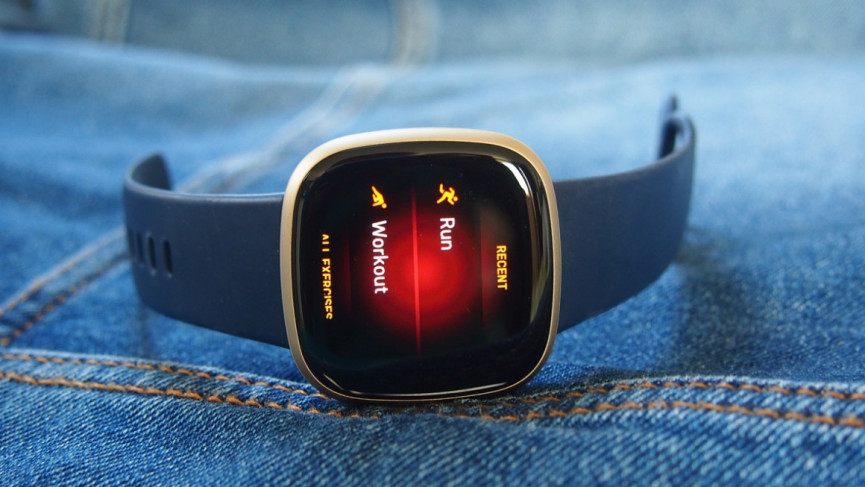
Fitbit Versa 3
A great smartwach for beginner runners
- Works with Android and iOS
- 40mm case size
- 1.58-inch AMOLED touchscreen always-on display
- GPS built in
- 12 hours GPS tracking
- Basic pace, distance, calories data
- Fitness tracking smarts
- Price when reviewed: $199/£199
Fitbit no longer sells its Ionic smartwatch, so now the Versa 3 and its Sense health watch are your choices if you want a Fitbit watch with built-in GPS.
Now we should say that the Versa 3’s run tracking features are nowhere near as advanced as most of the watches on this list including the Apple Watch. It’s a good choice for runners that put less emphasis on digging deep into metrics and do a few short runs every week.
You’ll get basic stats like pace, distance and calories, with metrics displayed individually on the Versa 3’s sharp display, that’s easy to glance at during the move. Your data can live within Fitbit’s app and third party apps including Strava.
Like the Apple Watch it’s the fitness tracking elements that really excel. The app is excellent, and using it for running means you get more of a 360-degree picture of your health, with badges earned for running goals and a more detailed assessment of your weekly activity.
Battery life is decent, but won’t trouble high-end Garmins. You get around 5-6 days of use and 12 hours of GPS tracking, which is two more hours than what the Ionic offered.
If you’d prefer a Fitbit fitness tracker to run with, the Fitbit Charge 5 includes built-in GPS in a slimmer design than the Versa and the Sense.
Wareable verdict: Fitbit Versa 3 review
Amazfit Bip U Pro
A seriously cheap watch that offers good running features
- iOS and Android
- 1.43 inches TFT LCD display
- 320 x 302 pixels
- 41mm case
- 230 mAh, 9 days battery life
- BioTracker 2 PPG sensor
- SpO2
- 5 ATM water resistance
- GPS
- Works with Strava
- Price when reviewed: $69.99/£59.99
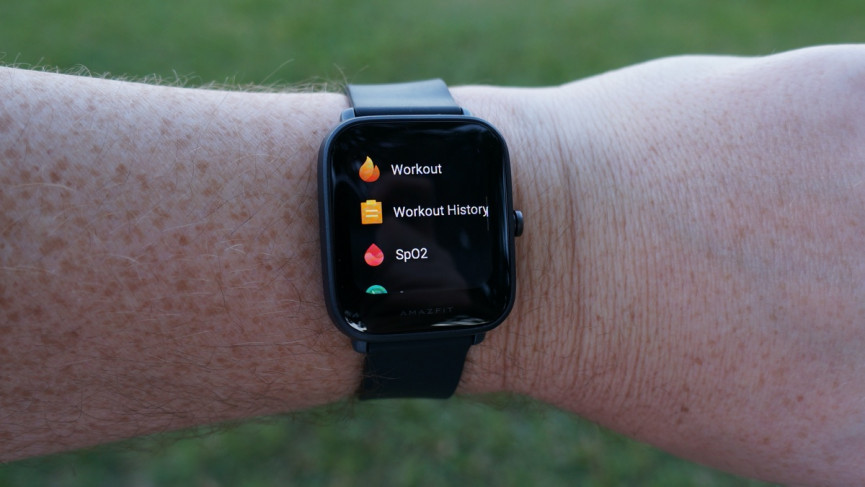
If you’re looking for a GPS sports watch on a very strict budget then the Amazfit Bip U Pro could be your first port of call. It features basic, core running features, for just $70.
It’s made of plastic, but it certainly doesn’t feel like a cheap watch to wear and the 42mm case holds in place a transflective display. It’s not as good as an Apple Watch, but it’s sharp and easy to read.
You’ve got built-in GPS, which we found reliable and there’s a heart rate monitor here too, which should be good for steady runs, though there’s no support to pair up an external sensor.
The Zepp Health app lets you sync your data over to Strava, which is something the Huawei Watch GT2e can’t.
Smartwatch features are basic, but we like the fact you can access music controls easily while running, which you can’t do on some pricier watches.
The battery performance is strong too. It lives up to the numbers based on our experience and as a package it makes for a cheap running watch that outperforms ones that are double or triple the price.
It’s basic, cheap and cheerful – but also reliable and extremely affordable.